
Change is a constant part of business. Whether an organization introduces new technology, redesigns internal processes, shifts its strategic vision, or undergoes major transformation projects, one thing remains true: change rarely succeeds without structure.
That structure is change management — a disciplined, intentional approach to helping individuals and teams move from the current state to the desired outcome. It ensures that people, processes, and systems transition smoothly, without unnecessary disruption or loss of productivity.
In practice, effective change management is less about controlling people and more about enabling them. It helps organizations navigate significant changes, strengthen company culture, and build capabilities for continuous improvement.
In this guide, we break down what change management is, why it matters, how the change management process works, the most widely used models, and how ITSM platforms like Jira Service Management and ServiceNow support structured change across complex environments.
What Change Management Really Means
Change management is both a discipline and a mindset. While textbooks describe it as a structured approach to organizational change, in reality, it’s about helping people adapt, learn new behaviors, and successfully adopt new processes or technology.
At a practical level, change management helps teams:
- prepare for new processes or tools
- reduce resistance to change
- align key stakeholders
- support new behaviors and desired skills
- maintain operational efficiency during transitions
- achieve successful implementation with minimal disruption
Rather than “managing change” like a checklist, it guides organizational transition in a way that is human-centered, strategic, and sustainable.
Why Organizations Need a Change Management Process
Organizations rely on predictable workflows, stable tools, and established communication channels. Without a change management process, significant changes can create confusion, friction, or even operational breakdowns.
A structured approach helps organizations:
- protect business processes during disruption
- ensure employees understand how and why change is happening
- build leadership commitment and shared direction
- minimize risks associated with new technology or new processes
- ensure change initiatives deliver business outcomes
- improve the success rate of transformation projects
- reinforce an organization’s culture and strategic vision
Change management brings clarity where uncertainty naturally exists. It gives project managers, executives, and teams a shared framework for planning, implementing, and sustaining change.
Types of Organizational Change
Not each change looks the same. Understanding the type of change helps determine the right strategy, level of communication, and intensity of support needed.
1. Incremental Change
Small, continuous improvements to existing processes. Examples include updates to workflows, reporting adjustments, or minor technology enhancements.
2. Transformational Change
Major, sweeping shifts across the organization. This includes cultural transformation, digital transformation, or redesigning business processes.
3. Organizational Change
Changes to structure, roles, or operating models. This often includes mergers, reorganizations, or new leadership.
4. Technology Implementations
Introducing or upgrading tools — such as new automation platforms, ITSM systems, CRM tools, or collaboration solutions.
5. Behavioral or Cultural Change
Supporting employees as they adopt new behaviors, mindsets, and professionally desired skills.
These categories frequently overlap during large-scale initiatives, especially when organizations implement new technology and redesign internal processes at the same time.
Comparison Table: Popular Change Management Models
A structured change management model helps guide communication, planning, training, and stakeholder engagement. Below is a comparison of the most widely used models in organizational change management.
Each model brings a different lens to the change journey. Many organizations blend elements from multiple models to create a tailored, practical approach.
The Change Management Process
A successful change management process offers a structured, repeatable approach that helps organizations coordinate tasks, involve stakeholders, and maintain stability throughout the change journey. While the exact steps vary between industries, most processes include components described below.
1. Identify the Need for Change
Change efforts begin when an organization identifies gaps in performance, opportunities for improvement, or new technology requirements. Leaders define the strategic vision and clarify the desired outcome.
2. Assess Impact and Readiness
Teams analyze how the change will affect departments, workflows, customers, and internal processes. This includes evaluating:
- affected teams
- risks
- resource needs
- existing processes and bottlenecks
- cultural readiness
3. Create a Change Management Strategy
This provides the structured approach for managing change. A strategy includes:
- key stakeholders
- change leaders
- communication plan
- training requirements
- project scope
- performance benchmarks
- timeline
4. Build a Change Management Plan
The plan details how change will unfold, outlining:
- responsibilities
- decision-making roles
- implementation steps
- support resources
- monitoring processes
Project managers play a critical role here, coordinating teams and ensuring the plan is realistic and actionable.
5. Communicate the Change
Clear communication channels help employees understand:
- why the change exists
- how it will impact them
- what successful change looks like
- where to find support
Leadership commitment is crucial at this stage to build trust and secure organizational buy-in.
6. Train and Support Employees
For new processes, systems, or behaviors to be adopted successfully, employees need:
- training
- hands-on practice
- guidance from change leaders
- time to adjust
Training employees ensures they can implement desired skills and confidently adopt new workflows.
7. Implement the Change
With planning complete, the change is executed. This may involve:
- technology rollouts
- process updates
- changes to communication channels
- new responsibilities
A structured process limits disruptions and allows for rapid issue resolution.
8. Monitor Results and Sustain the Change
Post-implementation, organizations assess:
- adoption rates
- performance benchmarks
- areas for continuous improvement
- outcomes achieved vs. expected business value
Sustaining new behaviors is essential for long-term success.
Change Management in ITSM: Jira Service Management and ServiceNow
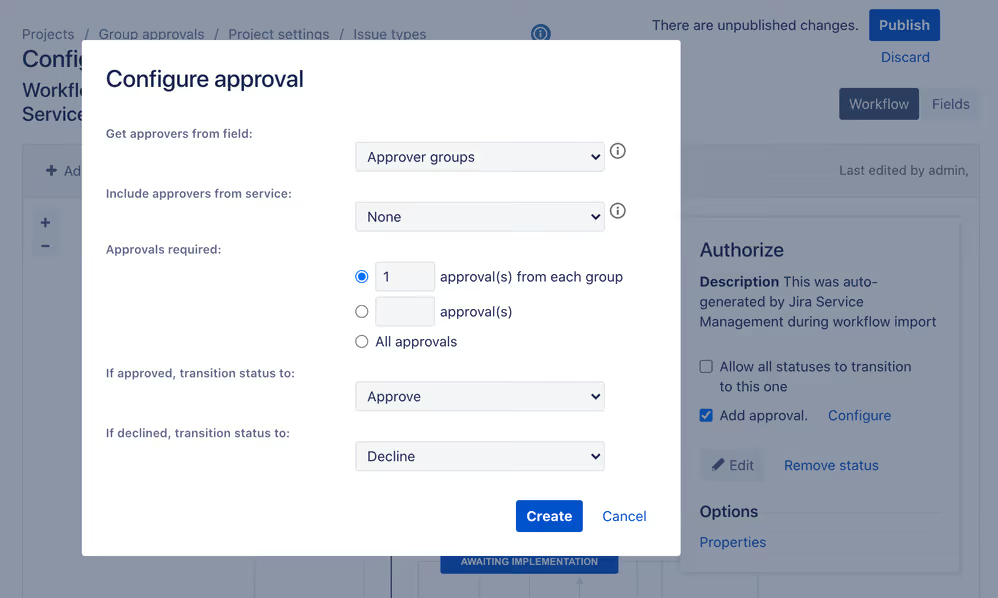
IT Service Management environments rely on change management as a core discipline. Platforms like Jira Service Management (JSM) and ServiceNow include built-in workflows to ensure safe, predictable, and compliant implementation of changes across technical and business teams.
In Jira Service Management:
- Standard, Normal, and Emergency change types
- Automated risk calculations
- CAB (Change Advisory Board) approvals
- Integration with DevOps pipelines
- Visibility into status, owners, and timelines
In ServiceNow:
- Advanced change assessment and impact analysis
- Workflow automation
- Detailed risk scoring and governance
- Comprehensive reporting and auditability

These ITSM tools support enterprise change management by offering structure, visibility, and alignment across teams managing complex organizational change.
Why Integrations Support Successful Change Initiatives
Change rarely occurs in a single team or system. New technology, new processes, or operational updates often span multiple tools — such as ITSM platforms, development environments, or project management systems.
Integrating tools helps organizations:
- align communication between teams
- maintain accurate data across systems
- avoid duplicated work or conflicting updates
- ensure visibility across the entire change process
- support leadership decision-making
- reduce the risk of failed or incomplete implementation
High-quality integrations strengthen the change management process and allow teams to manage change more confidently and efficiently.
Best Practices for Leading Change
Successful change management relies on a thoughtful, people-focused approach. The following best practices help organizations build momentum and sustain outcomes.
1. Communicate a clear strategic vision
Employees must understand not just what is changing, but why it matters.
2. Engage key stakeholders early
Involve executives, middle managers, and change leaders at the beginning of the change journey.
3. Use a structured approach
A predictable, repeatable process improves consistency and reduces operational risk.
4. Support employees through personal change
Provide training, coaching, and time to navigate the neutral zone between old and new behaviors.
5. Measure progress with a data-driven approach
Use benchmarks to evaluate adoption, performance, and effectiveness.
6. Integrate your systems
Ensure continuity between IT, development, support, and business units during the change process.
7. Reinforce desired behaviors
Celebrate quick wins, maintain momentum, and ensure teams don’t revert to the previous status quo.
Conclusion
Change is an essential part of organizational growth. Whether a company is implementing new technology, improving business processes, or driving transformational change, success depends on having a structured, human-centered approach to guiding people through transitions.
By combining effective planning, strong communication, leadership commitment, employee training, and the right technological support, organizations can navigate complex organizational change with confidence. With proper change management, teams not only adapt — they thrive.