Jira Jira Integration: Sync Work Items Between Jira Instances
Connect separate Jira instances so software developers, support, and other teams can collaborate without changing how they work. Synchronize issues, workflows, and project data between Jira Cloud, Jira Data Center, Jira Server, and Jira Service Management while maintaining near real-time updates.
Sync
Jira
-
Jira
Simple, Seamless, Effective
Integration
This integration bridges two leading project management tools, empowering both internal and external teams to collaborate by merging data seamlessly across platforms.
to establish a robust integration that synchronizes data and maintains workflows efficiently.
Experience comprehensive integration as you sync issues, work items, bugs, and epics
while customizing with fields, attachments, statuses, and assignees.
Smoothly migrate between tools
without losing data, ensuring a successful migration.
Our Certifications



Partnerships





Seamless
Jira
-
Jira
Sync
2-way Sync
Maintain a single source of truth with automatic cross-platform updates.
SaaS / On-Premise
Choose cloud or on-premise deployment to meet compliance and security standards.
Advanced Filtering
Sync only the most relevant data, reducing clutter and complexity.
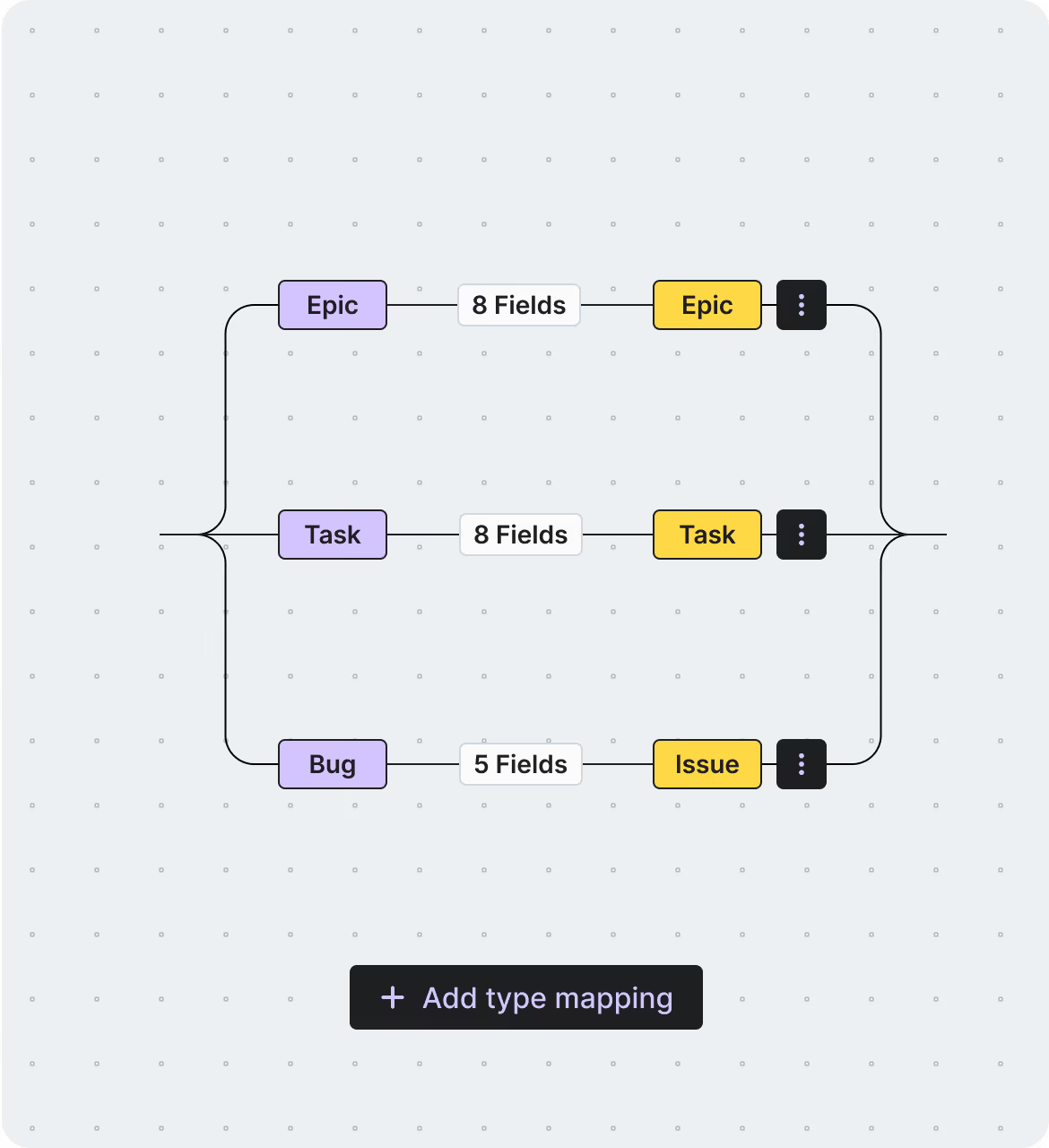
Auto Mapping
Reduce manual work with automated field mapping for a consistent data structure.
Reporting with Logs
Receive instant alerts to quickly identify and resolve integration issues.
Enterprise Security
Protect sensitive data and maintain compliance with enterprise-grade security.
Fair Pricing
We believe in offering a pricing model that prioritizes transparency, fairness, and value for our users. Our approach ensures that you only pay for what you truly need, without unnecessary extras or hidden surprises.
Pay just for one app
fixed fee you can trust—pay for a connection, no surprises.
No hidden costs
ensuring completely transparent, predictable pricing.
Unlimited usage
of fields and projects at no extra charge.
Fair migration cost
based on the number of events, not company size, ensuring fairness for all organizations.
Schedule a Free Demo with our Integration Expert
Discover how seamless and efficient integrations can be with a personalized demo. Our expert will walk you through the process, tailor the session to your specific needs, and answer any questions you have about connecting your tools effectively.

Sync Jira App Work Items in Both Directions
Getint supports the integration of all major fields.
What makes Getint your Go–To Integration Solution?
Seamless, secure, and scalable - Getint is trusted by enterprises worldwide to handle even the most complex integration needs. Whether you're syncing teams post-merger or streamlining your workflows across tools, we're here to make it easy.
Clear Pricing – No surprises!
Enterprise–Grade Security
Dedicated, In–House support!
Custom Integrations for any Challenge!
Quick Setup, Seamless Experience
Jira
-
Jira
Integration
Ready to simplify your workflows? Try connector on the Atlassian Marketplace and experience seamless integration between your tools. Start your 30-day free trial today and see the difference!

Issue Sync for Jira, 2-Way Integration, Single Install option
Hear what our happy Clients
& Partners say
Our clients and partners are at the heart of everything we do. Their success stories and positive feedback speak volumes about the value and reliability of our integration solutions. Here's what they have to say:
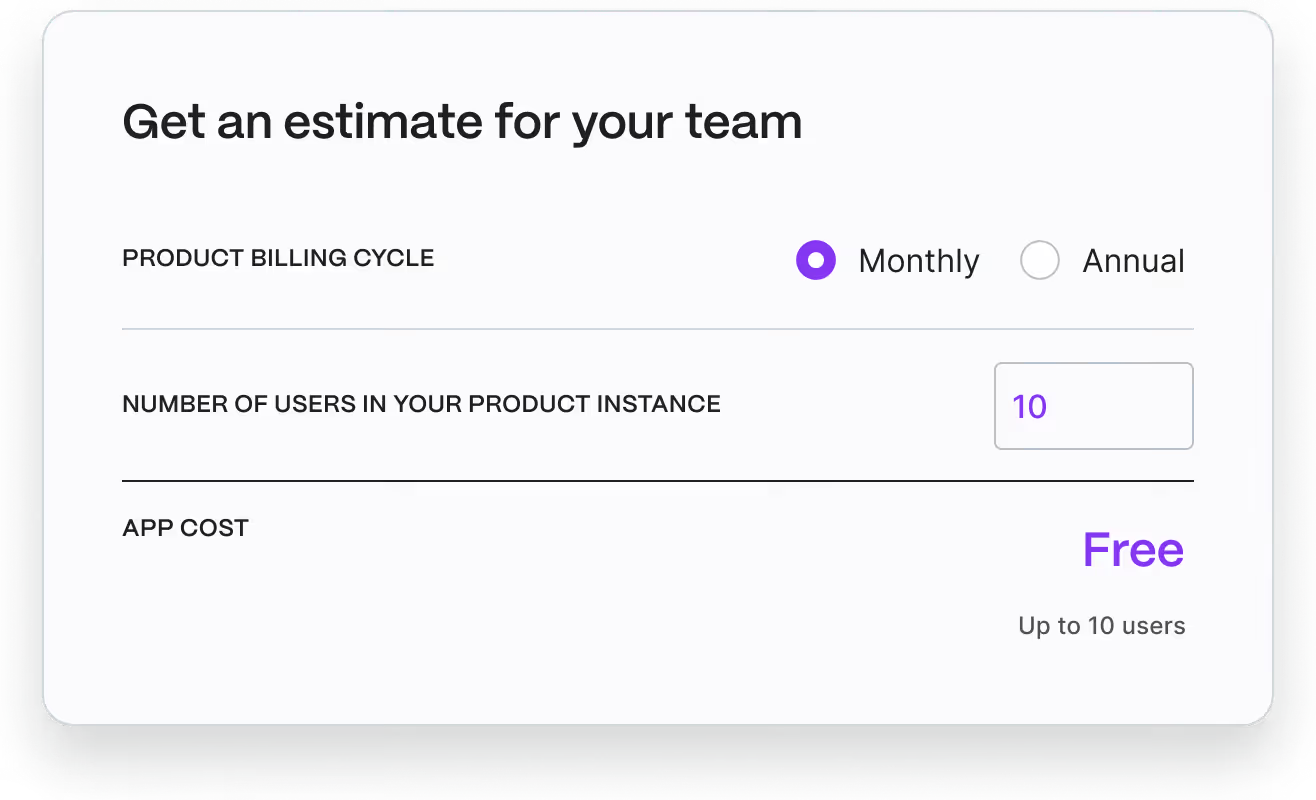
Check Pricing Tailored to Your Team
Finding the perfect plan for your team is easy! Our pricing is designed to fit organizations of all sizes and needs. Visit the Atlassian Marketplace to explore detailed pricing options and choose the plan that’s right for your workflow.
Jira to Jira Sync: Setup & Configuration
Check out our comprehensive documentation and discover how to unify your issue tracking and development workflows, enhance team efficiency, and streamline your project delivery



Jira <-> Jira Database Migration
Migrate issues between separate Jira instances — including Jira Cloud and Jira Service Management — using Getint's migration functionality. All important resources: custom fields, attachments, comments, and fix versions transfer cleanly between instances, helping teams keep Jira align during platform changes. Run a test migration first to validate field mapping, preserve visibility into historical progress, and ensure your software product data is ready for production and launch.
Have questions?
We've got you!
Our comprehensive FAQ section addresses the most common inquiries about our integrations, setup process, pricing, and more - making it easy to find the answers you need quickly.
Does Jira integrate with Jira for project management across separate teams?
Yes — Getint connects separate Jira instances and syncs issues, custom fields, sprints, fix versions, attachments, and comments bidirectionally. This covers the most common scenario where an organization runs multiple Jira instances for different teams: for example, one Jira instance for development and a separate Jira Service Management instance for customer support or IT operations.
You configure synchronization rules to control which issues move between connected instances, map fields and statuses independently on each side, and use JQL filters to determine which records should connect. Getint supports Jira Cloud, Jira Data Center, and Jira Server in any combination — including cross-deployment setups like Jira Cloud on one side and Jira Data Center on the other.
The result is that teams working in separate Jira instances maintain their own workflows, add ons, and boards while issue data flows automatically between instances without manual copying or status updates. This means helping organizations manage everything from day-to-day tasks to big ideas while maintaining visibility across departments. You can also integrate Jira with other tools like Notion, Monday, ServiceNow, Salesforce, etc.
Administrators can configure synchronization rules for issue updates and determine how deleted issues should be handled to maintain data consistency between connected Jira environments.
How do I link Jira to another Jira workspace?
To connect two Jira instances with Getint, follow these steps:
- Log in to Getint and create a new integration at the menu. Select Jira as both the source and destination app.
- Add the first Jira instance — enter the instance URL and authenticate using API tokens (for Jira Data Center or Jira Server) or OAuth (for Jira Cloud).
- Add the second Jira instance using the same method. Both instances can run different deployment types.
- Select the Jira projects to sync on each side.
- Configure field mapping — map issue types, statuses, priorities, custom fields, fix versions, assignees, and dates between the two Jira instances.
- Configure JQL filters to determine which issues should sync. For example, synchronize only issues from a specific project, with a particular label, or matching selected business criteria.
- Run a test sync to validate the configuration against real data before going live.
- Set up email notifications to monitor synchronization status, receive error alerts, and keep teams informed about important Jira integration events.
Teams can quickly learn how connected Jira environments behave before going live by agreeing on validating mappings and synchronization rules during testing.
Getint handles the data format differences between Jira instances automatically, including differences in custom field configurations and workflow status names. Detailed configuration options are available from the integration settings page. Teams can customize synchronization behavior using field mapping and JQL filters without relying on complex maintenance. Once live, the integration runs continuously — updates in either Jira workspace reflect in the other without manual intervention.
Is Jira being phased out, or should I migrate my tasks and projects?
No — Jira is not being phased out. Atlassian continues to develop Confluence, and Jira Cloud as its primary project tracking and service management platforms. While Jira Server reached end of life in February 2024, organizations can migrate to Jira Cloud or Jira Data Center depending on their requirements.
If your organization is still running Jira Server or needs to move between separate Jira environments, Getint can support the migration process by transferring issues, tasks, custom fields, attachments, comments, and other project data between Jira instances. Organizations often need to preserve years of project history and business-critical information during migration, making accurate field mapping and validation essential.
Both Jira Cloud and Jira Data Center remain widely used by enterprises. For organizations operating multiple Jira instances across different deployment types, Getint provides an integration layer that keeps environments synchronized during and after migration. This helps teams maintain visibility, reduce manual effort, and ensure that important project data remains accessible throughout the transition.
Can I link other project management tools, code repositories and development updates between separate Jira instances?
Yes. While Getint's Jira-to-Jira integration focuses on synchronizing issues, comments, attachments, assigns, custom fields, and workflows between separate Jira environments, teams often use it alongside development tools such as GitHub, GitLab, and Azure DevOps. Developers can include repository links, pull requests, commits, and source code references in Jira comments, allowing teams working in different Jira instances to share important context without leaving their workspace.
This approach helps project management, support, and engineering teams stay aligned while maintaining visibility into progress, ideas, tasks, and software development activity across connected Jira environments.
Can I sync Jira Software and Jira Service Management while controlling access?
Yes — syncing Jira Software and Jira Service Management across separate Jira instances is one of the most common use cases for Getint's Jira-to-Jira integration. The typical setup: a development team tracks work in a Jira Software instance while a support or IT team manages requests in a Jira Service Management instance. When a support ticket in Jira Service Management requires developer involvement, Getint automatically creates or updates a linked issue in the Jira Software instance.
You configure field mapping and synchronization rules independently for each side. Custom fields, comments, attachments, and status transitions all sync between the two instances. The integration supports cross-deployment setups — for example, Jira Service Management on Jira Cloud and Jira Software on Jira Data Center. It works across multiple Atlassian products and deployment types while allowing administrators to control access to synchronized data. Sensitive information can be filtered using JQL filters so only authorized users can access relevant issue data across connected instances.

Our Latest News & Updates
Stay ahead with insights, comparisons, and integration guides from the Getint team. Explore expert advice and practical how-tos to help your team simplify workflows and scale with confidence.