Integrations for Aviation Engineering, Maintenance, and Operations
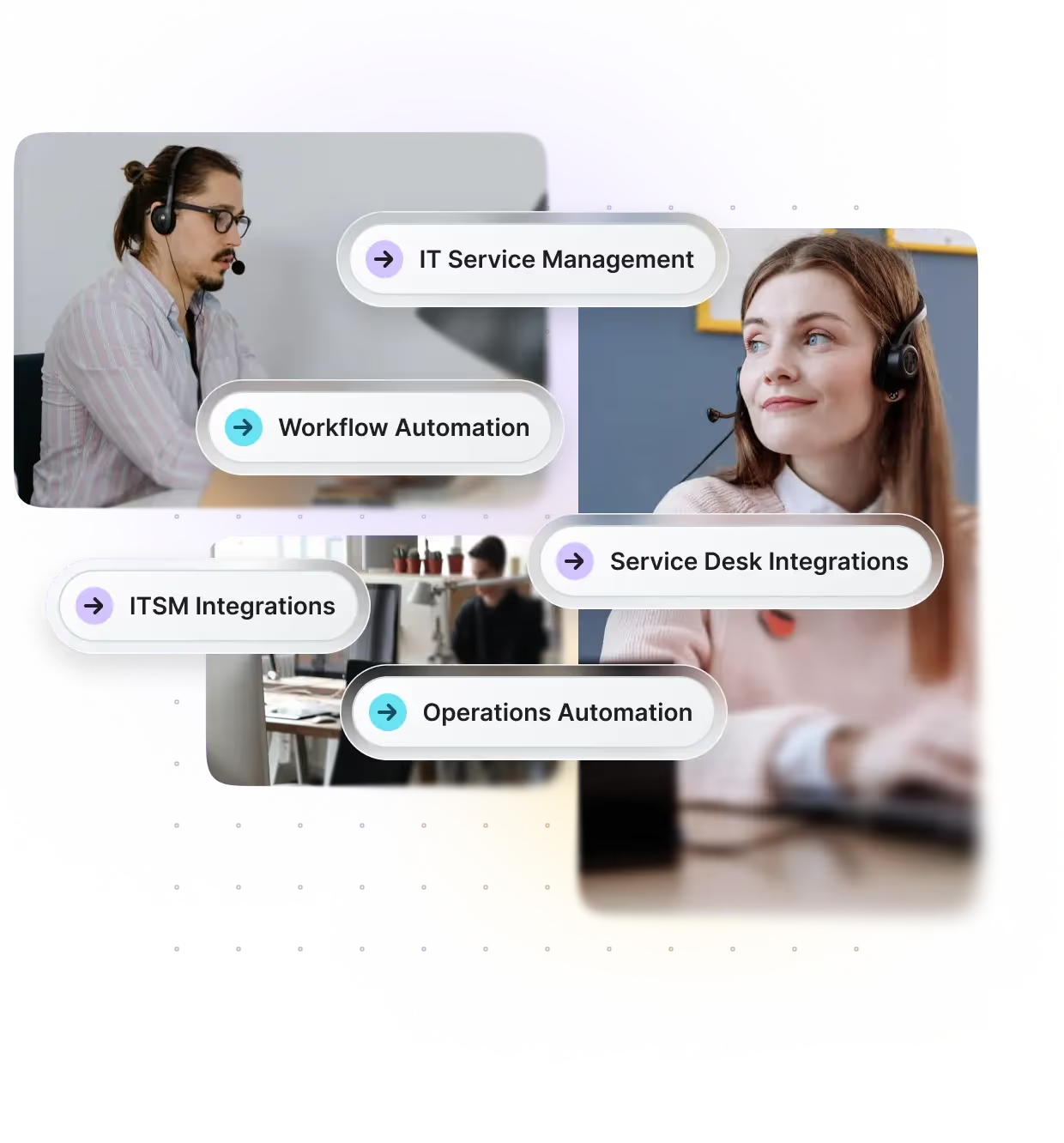
Aviation teams operate in safety-critical, highly regulated environments where engineering, maintenance, IT, and operations rely on different systems. Getint connects Jira, Azure DevOps, ServiceNow, and other enterprise tools to keep aviation workflows aligned across airlines, OEMs, and MRO partners — without compromising control or compliance.
With Getint, you can
Schedule a free demo with our integration expert






One Integration Platform for Aviation Workflows
All with bi-directional sync, custom field mapping, and secure data handling — designed for safety-critical aviation processes.
Built for Complex Aviation Environments

- Coordinating workflows between airlines, MRO providers, and OEM partners
- Connecting engineering, maintenance, IT, and operations teams across systems
- Maintaining traceability and auditability across aviation workflows
- Ensuring secure, controlled data exchange in regulated environments

Deep, Bi-Directional Sync
Exchange tickets, comments, attachments, and custom fields in real time.
Cloud, Server, and Data Center Support
Connect hybrid or multi-instance environments – even across companies.
SLA Performance Boost
Faster resolution times, better response visibility, and fewer data silos.
Custom Workflow Mapping
Align the integration with your organization’s existing processes and fields.
Team-Friendly Configuration
No-code setup for business teams, plus advanced options for admins.
Enterprise-Grade Security
ISO 27001 & 27018 certified, SOC 2 Type II audited, and fully GDPR compliant.
Aviation teams use Getint to coordinate engineering, maintenance, IT, and operations workflows across multiple systems — enabling controlled collaboration between airlines, MRO providers, and OEM partners while maintaining traceability and compliance.
Connect Any Aviation System You Use












Schedule a Free Demo with our Integration Expert
Discover how seamless and efficient integrations can be with a personalized demo. Our expert will walk you through the process, tailor the session to your specific needs, and answer any questions you have about connecting your tools effectively.

See Aviation Integrations in Action





Have questions? We've got you!
Our comprehensive FAQ section addresses the most common inquiries about our integrations, setup process, pricing, and more - making it easy to find the answers you need quickly.
What is integration in aviation?
Integration in aviation refers to connecting different systems, tools, and software used across flight operations, safety management systems, maintenance, and IT environments so that data can flow reliably between them.
Instead of siloed systems, aviation integration allows teams to work across existing tools while ensuring information is synchronized between airlines, MRO providers, and OEM partners.
For aviation organizations operating in regulated environments, integration is critical to ensure operational continuity, reduce risk, and maintain traceability across flight planning, maintenance, and compliance workflows.
How do integrations for aviation improve flight operations and safety management systems?
Integrations for aviation help connect safety management systems, flight planning tools, and operational software with IT and engineering systems.
By integrating systems used in flight operations with maintenance and support tools, aviation teams can ensure updates are shared across departments without manual intervention.
This improves operational visibility, enhances coordination between partners, and supports meeting regulations such as FAA requirements while reducing risk across critical processes.
What are APIs in aviation, and how do they support seamless integrations?
APIs in aviation are technical interfaces that allow systems and software platforms to exchange data securely. They enable organizations to integrate flight planning systems, safety management systems, and operational tools with other systems across the business.
With API-based integration, aviation organizations can connect existing tools without replacing them, supporting seamless integrations that align with business requirements and operational needs.
Getint uses secure integration mechanisms to synchronize selected data between systems while maintaining governance and control.
What are the 5 C’s of aviation, and how does integration support them?
The 5 C’s of aviation commonly refer to Communication, Collaboration, Compliance, Control, and Continuity.
Integration supports these principles by connecting systems used across flight operations, maintenance, and safety programs. By ensuring data moves reliably between tools and partners, aviation organizations can improve communication, maintain compliance with regulations, and support operational continuity across complex environments.
Effective integration helps ensure that aviation teams are ready to respond to changes, manage risk, and deliver consistent services to customers.
What does APU mean in aviation, and how do integrated systems support maintenance workflows?
APU stands for Auxiliary Power Unit — a critical aircraft system that provides power when engines are not running.
While integration does not control flight systems or aircraft hardware, it plays an important role in supporting maintenance operations related to components such as the APU. By integrating maintenance software, issue tracking systems, and operational tools, aviation teams can ensure maintenance tasks, inspection workflows, and service updates are synchronized across systems and partners.
This helps reduce delays, improve coordination, and support operational success across the aviation ecosystem.