Integrations for HR Teams, Systems, and Workflows
HR teams rely on multiple systems to manage onboarding, employee requests, internal processes, and cross-department collaboration. Getint connects tools like Jira, ServiceNow, and other enterprise platforms to keep HR workflows aligned across teams and systems — without manual work.
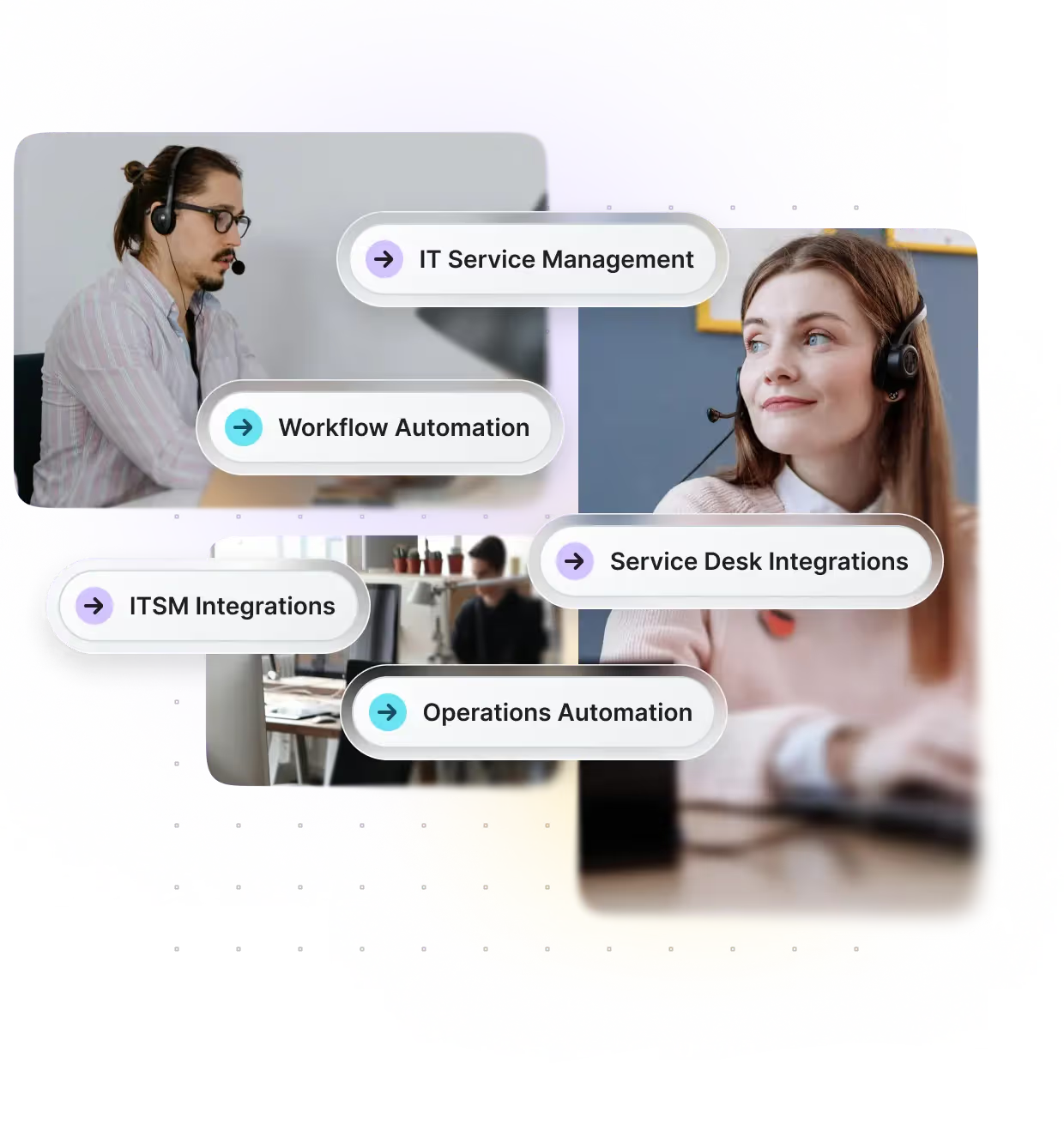
With Getint, you can
Schedule a free demo with our integration expert






One Integration Platform for HR Workflows
All with bi-directional sync, custom field mapping, and secure data handling — designed for HR and cross-team collaboration.
Built for Complex HR Environments

- Connecting HR and IT service management systems
- Supporting onboarding and offboarding workflows across tools
- Maintaining visibility across employee-related requests
- Aligning HR processes across global teams and multiple platforms

Deep, Bi-Directional Sync
Exchange tickets, comments, attachments, and custom fields in real time.
Cloud, Server, and Data Center Support
Connect hybrid or multi-instance environments – even across companies.
SLA Performance Boost
Faster resolution times, better response visibility, and fewer data silos.
Custom Workflow Mapping
Align the integration with your organization’s existing processes and fields.
Team-Friendly Configuration
No-code setup for business teams, plus advanced options for admins.
Enterprise-Grade Security
ISO 27001 & 27018 certified, SOC 2 Type II audited, and fully GDPR compliant.
HR teams use Getint to synchronize onboarding, employee service requests, and internal approval workflows across multiple systems — improving collaboration between HR, IT, and operations while maintaining process visibility and control.
Connect Any HR System You Use









Schedule a Free Demo with our Integration Expert
Discover how seamless and efficient integrations can be with a personalized demo. Our expert will walk you through the process, tailor the session to your specific needs, and answer any questions you have about connecting your tools effectively.
See HR Integrations in Action




Have questions? We've got you!
Our comprehensive FAQ section addresses the most common inquiries about our integrations, setup process, pricing, and more - making it easy to find the answers you need quickly.
What is integration in HR?
Integration in HR refers to connecting HR systems, service management platforms, and other business applications so that employee data and HR data can move between systems without manual data entry.
Instead of managing employee records across multiple systems, hr integrations allow organizations to synchronize selected data points such as job title, employment status, onboarding tasks, and employee milestones across platforms like a human resources information system, an applicant tracking system, and IT service tools.
An effective hris integration reduces data silos, improves data accuracy, and eliminates repetitive tasks that come from manual processes. By connecting HR software with other integrated systems, organizations can save time and improve the overall employee experience.
What are examples of HR integrations?
Common hr integration examples include connecting a human resources management system with an applicant tracking system so new hires are automatically created in onboarding workflows.
Another example of hr system integration is synchronizing employee onboarding requests with IT service management systems to trigger user provisioning, identity management, and Active Directory account setup for new employees.
Organizations also integrate HRIS platforms with time tracking tools, performance management systems, benefits administration software, and expense management platforms. These hr integration benefits include eliminating duplicate data entry, reducing costly errors, and ensuring the same data is reflected across multiple platforms without manual intervention.
What are the four types of HR integration?
There are four common types of integration strategies in HR environments:
- Data-level integration – synchronizing employee records and HR data across HRIS systems using APIs or a unified API.
- Process integration – aligning business processes such as employee onboarding, vacation requests, performance reviews, and payroll benefits workflows across multiple systems.
- Application integration – connecting HR applications, collaboration tools, and third party applications so they operate as one management system.
- Identity and access integration – linking HR systems with identity providers to support secure access and user provisioning.
Modern hr integrations rely on application programming interfaces (APIs) and HRIS APIs to connect multiple HR providers without requiring an in house solution or complex custom integrations.
What are the 7 pillars of HR, and how do integrations support them?
The 7 pillars of human resources typically include talent management, employee engagement, performance management, compensation and payroll software coordination, benefits administration, compliance, and workforce planning.
Without hris integration, these pillars often operate in data silos across multiple systems. HR teams and hiring managers must manually update employee records, payroll details, and employee performance data across platforms, increasing the risk of costly errors.
By implementing hr integrations, organizations ensure real time data flows between HRIS platforms, applicant tracking systems, and other software applications. This supports better business outcomes, improves employee experience, and ensures that new employees and existing employees are managed consistently across the tech stack.
Are HR professionals experiencing burnout, and can HR integrations help?
Studies suggest a large percentage of HR professionals report burnout due to manual processes, repetitive tasks, and constant data entry across multiple HR systems.
When HR teams must manually update employee data, manage data formats across different systems, and coordinate between multiple platforms, manual intervention becomes a daily burden.
By implementing integrations for HR, organizations reduce manual data entry, streamline business processes, and connect integrated systems using a unified API approach. This helps HR teams focus on strategic human capital management, employee engagement, and supporting hiring managers instead of maintaining fragmented systems.
Effective hris integration supports automation, improves data accuracy, and enhances customer satisfaction by ensuring employees receive consistent support across all HR-related systems.